


99 Nights in the Forest: Is It Based on a True Story?
99 Nights in the Forest claims to be based on a true story. Here's the real 2023 Amazon crash that inspired it, and what's fiction.


TL;DR
99 Nights in the Forest is inspired by the real 2023 Amazon plane crash in Colombia, where four children survived 40 days in the jungle. The game's rescue mission, hunger mechanic, and broken planes reference the true story, while the deer-headed monster is a fictional addition based on Wendigo folklore.
99 Nights in the Forest is a horror survival game on Roblox, and it opens with a message claiming it's based on a true story with some details changed. That tagline alone has been enough to send players digging for answers.
Turns out there's more truth to it than you'd expect from a Roblox horror game, but also plenty that's pure fiction.
In this article, we'll explore the real story behind 99 Nights in the Forest and break down what's fact and what's fantasy.
Also Read: 99 Nights in the Forest: Kids Have Jobs Update Guide
The Real Story Behind the Game
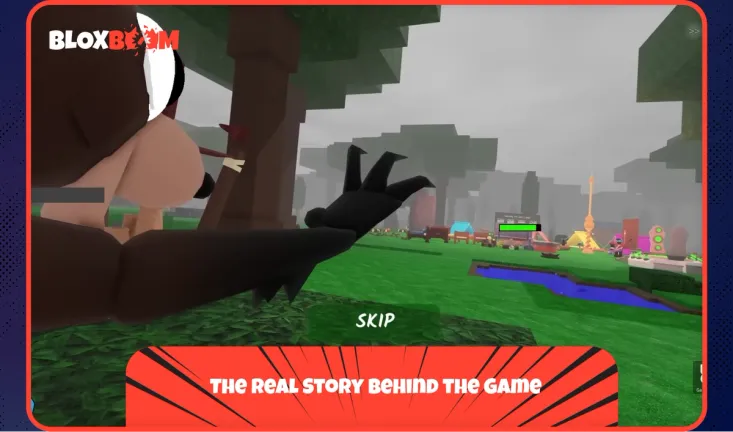
99 Nights in the Forest is inspired by a real plane crash in Colombia on May 1, 2023. A small aircraft went down in the Amazon jungle, killing the three adults on board. Four children survived: 13-year-old Lesly, 9-year-old Soleiny, 4-year-old Tien, and 11-month-old Cristin.
The children, from the Huitoto indigenous group, survived 40 days in the jungle using Lesly's knowledge of edible plants and shelter-building. They ate cassava flour, wild fruits, and seeds while avoiding jaguars and snakes until rescuers found them.
In the game, you play as a rescuer searching for the missing children, not as the children themselves. A broken plane on the map nods directly to the real crash. The horror element, a deer-headed monster stalking the forest, isn't based on the true story at all. It's closer to Wendigo folklore, added purely to make the game scarier.
Also Read: 99 Nights in the Forest: Dino Kid Update Guide
Familiar Elements Present in 99 Nights in the Forest
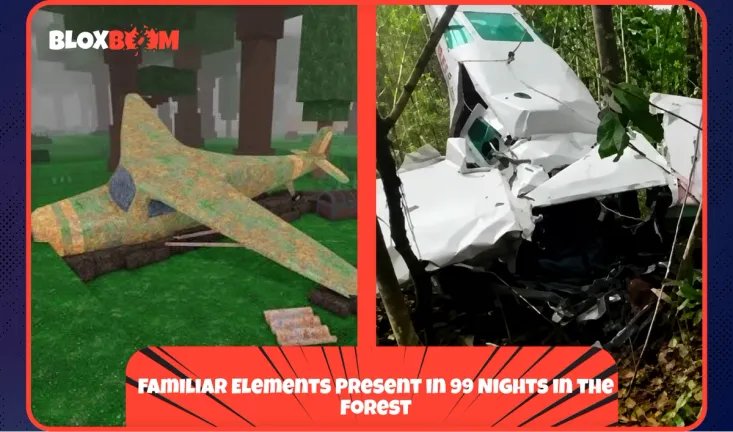
Once you know the real story, a lot of the game's mechanics start to make sense. Rescuing four children is the core objective, a direct match to the four kids who survived the actual crash. The broken planes scattered around the map are a clear reference to the aircraft that went down in the jungle.
Managing hunger by eating berries mirrors how the real children survived on wild fruits, seeds, and cassava flour. Even the danger of predators lurking around your camp reflects the jaguars and snakes the children had to avoid during their 40 days stranded.
The Hunter Logs and Ranger Diaries you find while exploring add another layer, giving pieces of the story as you progress, much like how the real rescue operation slowly pieced together what happened after the crash. The setting itself, a dense, unforgiving forest, captures the same isolation the children faced with no way to signal for help.
The one clear departure is the monster. The deer-headed creature hunting you down has no real-world basis; it's a fictional addition drawing from Wendigo mythology rather than anything from the actual event.
Also Read: All Crafting Recipes in 99 Nights in the Forest
Conclusion
99 Nights in the Forest takes a real survival story and turns it into a horror experience, but the core inspiration is genuine. Four children really did survive 40 days lost in the Amazon after a plane crash, and that resilience is baked into the game's objective, mechanics, and setting. The monster and supernatural elements are fictional additions meant to raise the stakes, but the heart of the game comes from an actual rescue that captivated the world in 2023.